Laser engraving materials: allowed, limits and forbidden. Written for the United Kingdom, in British English. A price in pounds is shown only when this site has already checked a UK shop; euro amounts from the English edition are not converted and are not repeated here. Shop links open .
Reference · materials
Laser engraving materials: allowed, limits and forbidden — United Kingdom
The right material is the difference between a successful gift and a part that smells wrong — or hurts your lungs. This page lists what consumer diodes and CO₂ commonly engrave, what needs an intermediate product (metal marking), and what stays off limits, especially <strong>PVC</strong> and chlorinated derivatives. Cross-check cutting & engraving materials on the hub.
Step 4 of 8 · Updated 31 October 2026 · Data: official manufacturer spec sheets
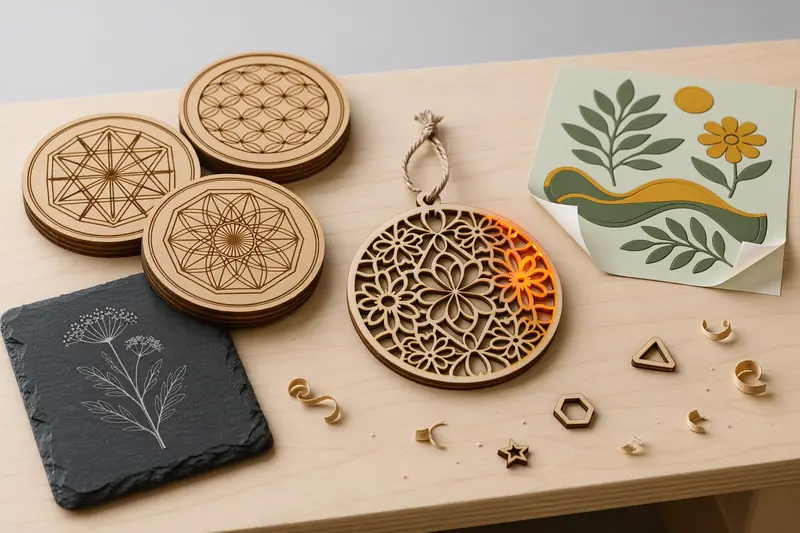
Commonly engraved materials
| Material | Use | Precaution |
|---|---|---|
| Solid wood, plywood, MDF | Decor, signage | MDF glue and resin: extract fumes; visible grain |
| Cast acrylic (PMMA) | Clear or opal sheets | Prefer cast over extruded that may melt unevenly |
| Vegetable-tanned leather | Marking, bracelets | Chrome or synthetic leather: unknown composition → avoid |
| Slate, some stone | Decorative plates | Fine dust: stronger extraction |
| Bare metal (stainless, brass) | Light marking only | Diode: mainly painted/anodised; CerMark spray or fibre/IR for bare |
Forbidden or avoid
- PVC, vinyl, Cricut vinyl — HCl release; see safety.
- Thick polycarbonate, polystyrene foam, fibreglass, halogenated materials without datasheet.
- ABS: irritating fumes; only with strong extraction and scrap test.
- Direct food contact: laser does not create a food-safe barrier; add a barrier (film, insert).
3D-printed PLA or PETG parts before engraving: see PLA PETG comparison — plastic melts slightly on the surface; use low power and air assist.
Frequently asked questions
Can a diode engrave glass?
Often with masking product or intermediate (spray) per maker docs; results vary widely. Without a validated procedure, treat glass as experimental.
MDF or plywood for outdoor use?
Engraving is possible, but moisture swells MDF; prefer solid wood or acrylic for outdoor signs, then a varnish compatible with the engraving.
How to store material scraps?
Label each scrap (cast PMMA, 3 mm birch…) so it is not confused with unknown plastic. Keep vinyl and PVC away from the laser area.
Corrugated cardboard for prototyping?
Yes for setting tests, with fire watch: cardboard burns fast. Keep an extinguisher and a small test area.
Sources
- https://www.uvic.ca/ohse/_assets/docs/radiation-safety-folder/laser-cutter-materials.pdf
- https://www.inrs.fr/risques/rayonnements-optiques/rayonnement-laser.html
- Relevés 31/10/2026
Sources checked on 31 October 2026. Machine prices shown are from official European stores in late October 2026 and may change. Technical figures come from manufacturer sheets; we have not tested every engraver in a workshop.
Written by Emmanuel Sauvage · Scan3D Lab
A question about this machine or guide? Ask it here
We read every message and reply by email, usually within a few days.