Safety
A 3D printer at home with children: the risks listed by NIOSH and how to limit them
The US National Institute for Occupational Safety and Health (NIOSH) published a 40-page guide in 2023 on 3D printing in schools, libraries and makerspaces, summarised in a bulletin dated 29 July 2024. Its findings also apply to a printer in a home with children. Here is what it lists and how to apply it at home.
Updated 23 October 2026 · Data: official manufacturer spec sheets
This article belongs to our Kids section, where we group related guides and comparisons.
The risks identified by NIOSH
| Risk | At home |
|---|---|
| Ultrafine particles (< 100 nm) and volatile organic compounds | ventilated room, never a bedroom |
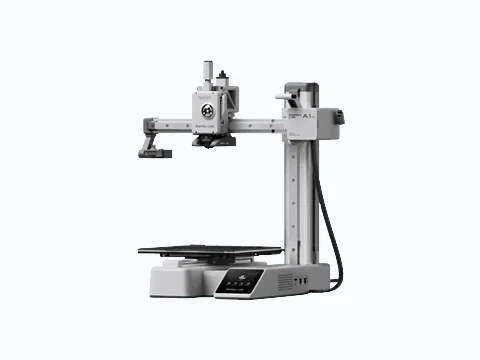
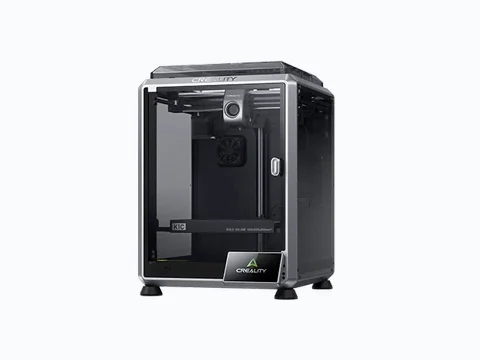
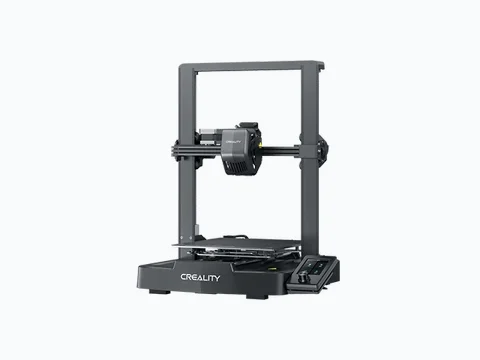
| Heat: burns from hot surfaces | enclosed frame or adult supervision |
| Moving parts: hair, fingers, clothing | hair tied back, hands out of the running machine |
| Solvents (cleaning, resin): vapours, irritation | stored out of children’s reach |
| Electricity, noise | unplug for maintenance; quiet mode at night |
Risks: NIOSH Science Bulletin of 29 July 2024. “At home” column: our adaptation for family use.
The five-level method, applied at home
NIOSH ranks measures from most to least effective: eliminate, substitute, engineering controls, administrative rules, then protective equipment as a last resort.
- Eliminate: no printer in a bedroom or the room where people sleep.
- Substitute: prefer PLA, printed at a lower temperature, over ABS; for a child, prefer filament over liquid resin.
- Engineering controls: ventilated room, enclosed frame with filter if possible; NIOSH cites ventilation and HEPA filters.
- Rules: an adult starts and stops prints; nobody touches the nozzle or bed; leave the room during long prints.
- Protection: gloves and goggles to remove supports or handle resin.
Frequently asked questions
Is PLA harmless?
NIOSH makes no exception: every printer-filament combination evaluated emits particles and organic compounds. PLA remains the most sensible choice, but ventilation is still needed.
Is an air purifier needed?
NIOSH cites ventilation and HEPA filters as effective engineering controls. An open window in an unoccupied room is the minimum.
Sources
- https://www.cdc.gov/niosh/bulletin/2024/safe-3d-printing.html
- https://www.cdc.gov/niosh/docs/2024-103/default.html
Pages and prices checked on 23 October 2026. We have not had these products in hand: our verdict draws on the manufacturers’ spec sheets and our own calculations.
A question about this machine or guide? Ask it here
We read every message and reply by email, usually within a few days.